Oil painting does not settle into place quickly. It builds slowly, with each layer affecting what comes after it. Early marks often act as direction rather than final form. They establish placement, tone, and general movement across the surface.
Nothing in this process is immediate. Each stage changes how the next one behaves, especially when working with landscapes and wildlife, where depth and atmosphere matter as much as subject clarity.
In Mary’s work, this approach shows up in how forest scenes and wildlife settings hold space. The image does not appear all at once. It forms through accumulation.
Underpainting As Direction, Not Detail
The first layer is rarely about precision. It is closer to a layout of relationships where light will sit, where weight gathers, and where space needs to remain open.
At this stage, detail is intentionally limited. Too much early definition creates rigidity later in the process. Instead, broad placement guides how the painting will develop.
In wildlife subjects, this helps maintain balance between the figure and the environment. A deer in a forest setting, for example, is positioned first in relation to surrounding depth rather than treated as an isolated object.
How Layers Change Surface Depth
As paint layers build, the surface begins to hold more information. Some areas absorb new paint differently than others. This creates variation in density, which affects how light interacts with the surface.
This is where atmosphere begins to form, not through added detail, but through controlled buildup.
⦁ Thin layers allow light to pass through and create depth
⦁ Heavier applications hold surface presence and visual weight
⦁ Soft transitions reduce separation between subject and environment
⦁ Reworked areas introduce subtle irregularities that feel natural rather than planned
These differences are not decorative. They define how the painting reads at a distance and up close.
Working With Natural Inconsistency
In real environments, nothing stays visually uniform. Forest light breaks unevenly. Wet ground reflects selectively. Wildlife does not sit in symmetrical conditions.
Layered painting mirrors this behavior without copying it directly. Uneven surfaces, softened edges, and gradual shifts in tone help avoid flatness.
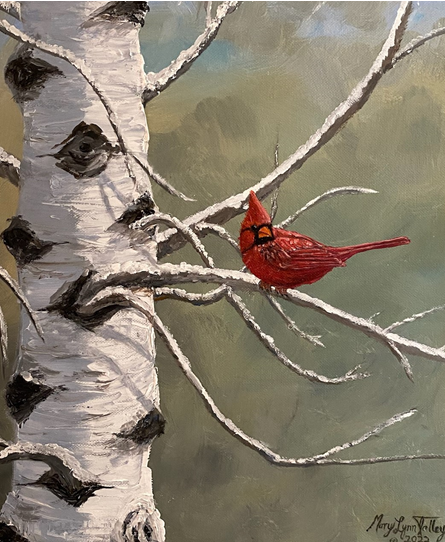
One of Mary’s woodland paintings uses this approach to hold depth behind a central wildlife subject without isolating it. The background does not sit still. It carries variation that supports the main focus without competing for attention.
Adjustment Through Reworking
Oil paint allows changes even after initial drying. This makes reworking a natural part of the process rather than a correction step.
Areas can be softened after they become too sharp. Others can be reinforced when they lose presence. This back-and-forth is part of how consistency is maintained across the surface.
Nothing is treated as permanently fixed until the final stage. Even then, small adjustments continue to refine the balance between elements.
How Atmosphere Becomes the Final Outcome
Atmosphere is not added at the end. It develops through repeated layering and adjustment. It comes from how surfaces interact with each other rather than from a single effect applied across the painting.
When viewing a completed work, what appears calm or unified is often the result of many small decisions layered over time. None of them dominates on their own, but together they define how the piece feels visually stable.
In Mary’s paintings, this is what allows wildlife and landscape to sit within the same space without separation. The environment does not act as a background. It becomes part of the same visual system built through layers.
Final Thoughts
Layered oil painting is not about speed or immediate resolution. It is a controlled buildup where each stage influences the next. The process depends on patience with surface change and awareness of how depth develops gradually.
What remains in the final work is not just image clarity, but atmosphere created through time, adjustment, and material response.